
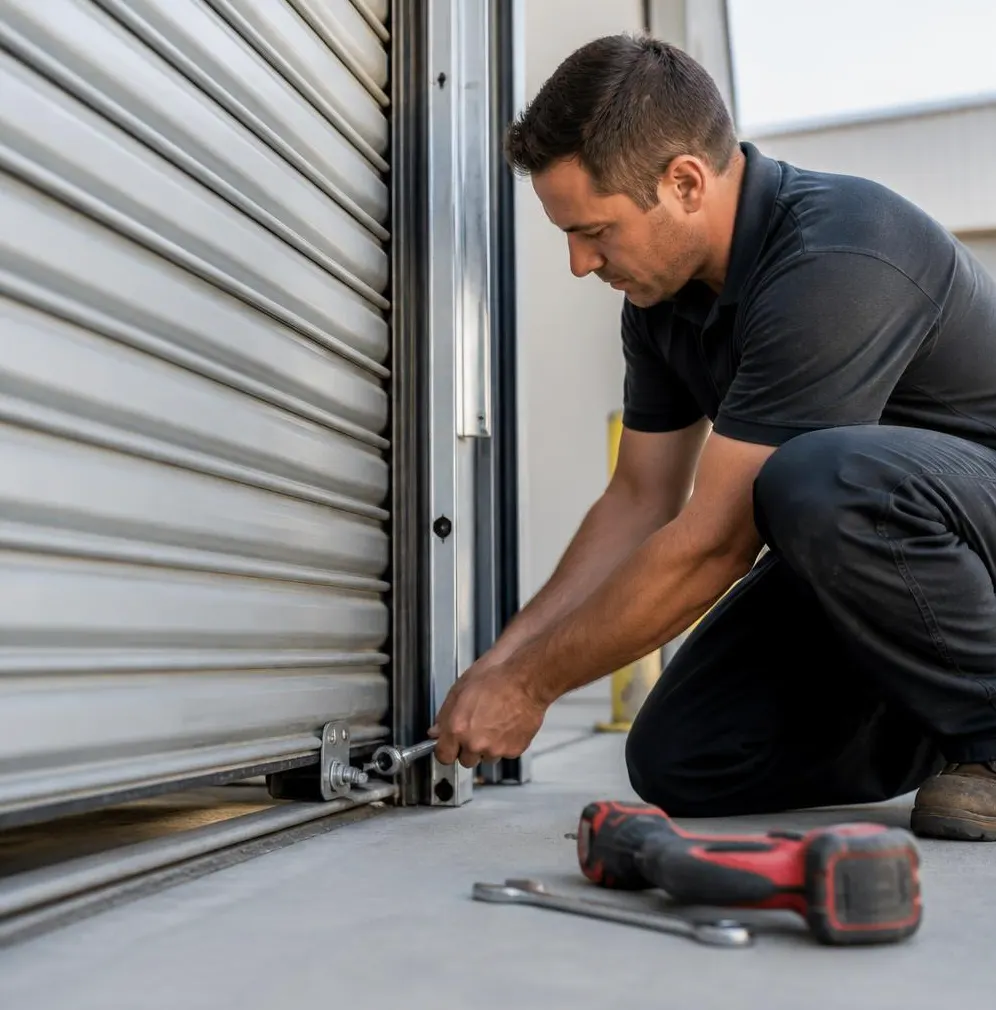
Grinding usually means worn rollers or a failing opener gear. Squealing almost always points to dried-out lubrication or worn hinges. Popping is the one to take seriously — it's often a spring or cable about to fail. Rattling is typically loose hardware or a slack chain. Here's how to tell them apart and what fixing each one actually involves.
Grinding: Metal-on-Metal in the Track or Opener
Symptoms: A harsh, scraping grind as the door travels, sometimes paired with jerky movement or the door slowing down partway through its cycle.
A technician checks these in order:
- Rollers first. Steel rollers rust in Pasco County's humidity, and nylon rollers wear out after years of daily use. Either way, a pitted or flat-spotted roller grinds against the track instead of rolling smoothly through it.
- Roller bearings. Even a roller that looks fine can have a seized or worn bearing inside, which is where most of the grinding sound actually comes from.
- Opener drive gear. Chain-drive openers use a plastic gear that wears down over years of use. A stripped gear grinds loudly and eventually lets the chain slip entirely.
- Spring cones. Less common, but a torsion spring rubbing against a worn mounting cone can also produce a grinding note.
The fix is usually roller replacement — sealed-bearing nylon rollers hold up better than steel in humid climates — or an opener gear kit if the sound is coming from the motor unit itself.
Squealing: Dry Metal Parts
Symptoms: A high-pitched squeal, often worse on the first open of the day or after a stretch of humid weather.
Check order:
- Lubrication. This is the first and most common cause. Factory lubricant on hinges, rollers, and springs dries out faster in Florida's heat and humidity than in drier climates, leaving bare metal to squeal against metal.
- Hinge pins. Pitted or rusted hinges keep squealing even after lubrication and need to be swapped out.
- Chain or belt tension. A loose opener chain can squeal as it rides unevenly on the sprocket.
- Spring bearing plates. Worn plates at the ends of the torsion spring squeal under load.
The fix is a proper lithium- or silicone-based garage door lubricant applied to hinges, rollers, and the spring — not WD-40, which attracts dust and burns off quickly. Pitted hinges get replaced outright.
Popping: Spring, Cable, or Binding Hardware
Symptoms: A single loud pop or bang, sometimes with the door jumping, jerking, or simply stopping afterward.
This is the noise to stop and investigate before using the door again. Check order:
- Torsion spring. A cracking or breaking spring makes a sharp, gunshot-like pop, often followed by the door feeling much heavier or refusing to open. Springs under tension are dangerous to handle — this is not a DIY repair.
- Cables. A fraying cable popping off its drum makes a similar sound and can let one side of the door drop.
- Track binding. Afternoon storms and wind-load stress on the door during hurricane season can knock a track slightly out of alignment, causing the door to catch and pop as it forces past the tight spot.
- Panel seams. Heat and humidity cause steel and aluminum panels to expand and contract; a seam that's starting to separate can pop faintly as the door flexes.
The fix depends on the source: spring replacement (both springs are replaced together, even if only one broke, since the other is usually close behind), cable repair or replacement, or track realignment.
Rattling: Loose Hardware
Symptoms: A steady vibration or rattle through the whole travel of the door, not just one spot.
Check order:
- Bolts and brackets. Vibration loosens track bolts and hinge screws over time, and humidity-driven swelling in wood jambs can work anchors loose faster than in drier regions.
- Opener chain slack. A sagging chain on a chain-drive opener is one of the most common rattle sources and is a quick adjustment.
- Track brackets. Brackets stressed by wind during storm season can loosen from the wall or header.
- Panels. A warped or dented panel flexing against its neighbor will rattle with every cycle.
The fix is usually a full hardware tightening pass plus a chain tension adjustment — both are standard parts of a tune-up.
When to Call Precision Garage Door of Saint Leo
If you're hearing a pop, a grind that's gotten louder over a few days, or a door that feels noticeably heavier than it used to, don't keep running it — call us. For a suspected spring or cable, our Garage Door Spring Repair and Garage Door Cable Repair technicians handle the job safely with the right tension tools, something that genuinely isn't safe to DIY. For grinding, rattling, or a door that's catching on the track, our Preventive Maintenance & Tune-Ups service covers roller inspection, lubrication, hardware tightening, and track alignment in one visit.
If your garage door in Saint Leo, Dade City, Zephyrhills, Wesley Chapel, or anywhere in Pasco County is making noise you can't explain, give Precision Garage Door of Saint Leo a call — we'll find the cause and fix it right the first time.