
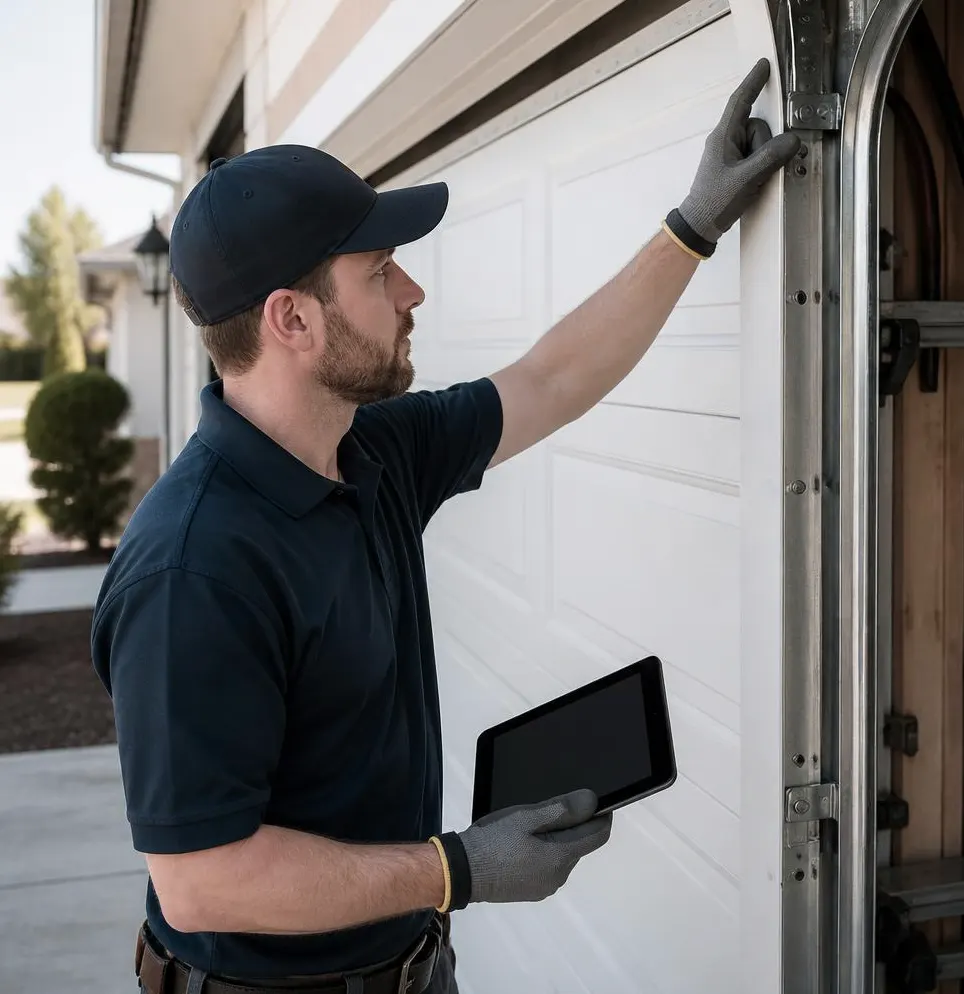
The Morning It Hesitates
You hit the button on your way to work and the door doesn't just open — it hangs for a second, shudders, then grinds the rest of the way up. Or maybe it's the opposite: it closes but doesn't sit flush against the slab anymore, and you can see a sliver of daylight along one edge. After a Florida summer of humidity, afternoon downpours, and the kind of heat that swells wood and softens weatherstripping, this is exactly the time of year that problem shows up. Before the last named storms of the season roll through Pasco County, a quick seasonal check-up can catch small issues while they're still cheap and easy to fix.
This routine takes about twenty minutes, uses tools most homeowners already own, and draws a clear line between what you can safely do yourself and what should be left to a technician.
Tools You'll Need
- A sturdy stepladder
- A flashlight or phone light
- A socket wrench or adjustable wrench
- Silicone-based garage door lubricant (not WD-40 or grease)
- A soft, dry cloth
- A level (optional, for the balance check)
The Step-by-Step Routine
- Look at the tracks first. With the door closed, run your flashlight along both vertical tracks. In this climate, you're checking for two things: rust spots from humidity and standing moisture, and dents or gaps from the door shifting in its frame. A track that's bent even slightly out of parallel will make the door bind or jump as it travels.
- Check the weatherstripping along the bottom and sides. After a wet summer, rubber seals often swell, crack, or pull loose from their track. Press along the length of the bottom seal — if it's stiff, split, or doesn't spring back, it's letting humid air and water into the garage, which accelerates rust on everything inside.
- Test the auto-reverse safety feature. Place a 2x4 flat on the ground where the door closes. Run the door down — it should touch the board and reverse immediately. Then test the photo-eye sensors near the bottom of the tracks by waving a broom handle through the beam while the door is closing; it should stop and reverse. If either test fails, stop using the opener until it's repaired — this is a safety issue, not a convenience one.
- Lubricate the moving metal parts. Using the silicone lubricant, apply a light coat to the rollers, hinges, and the opener's chain or screw rail. Skip the tracks themselves — lubricating the tracks actually attracts grit and makes rollers slip. Wipe off excess with your cloth so it doesn't drip onto the floor or your car.
- Tighten the visible hardware. Vibration from regular use loosens the bolts on the track brackets and the hinges between panels over a season. Go over each one with your wrench, snugging anything that's visibly loose. Don't force anything that feels stripped or corroded — that's a sign for a technician, not a reason to crank harder.
- Run the manual balance test. Pull the release cord to disconnect the opener, then lift the door by hand about halfway. A properly balanced door will stay put on its own. If it drops on its own or shoots upward, the spring tension is off — reconnect the opener and stop there. This is diagnostic information for your technician, not a DIY repair step.
- Clean the photo-eye sensors and the track interior. Wipe the small sensor lenses near the floor with a soft, dry cloth — pollen, dust, and the film that builds up from humid air can cause false stops. Brush out any leaves or debris that have collected in the tracks, especially after afternoon storms.
- Give the cables and springs a visual-only check. Look, but don't touch. You're scanning for frayed strands on the cables near the bottom brackets and for gaps or rust in the coils of the springs above the door. Any irregularity here means a call to a technician — these parts are under extreme tension and aren't safe to adjust or replace yourself.
Where the Homeowner's Job Ends
Everything above — lubrication, tightening visible bolts, cleaning sensors, testing the auto-reverse — is safe for a homeowner with basic tools. Springs, cables, and anything involving the door coming off its tracks are a different category entirely. A torsion spring under tension can cause serious injury if it releases improperly, and an off-track door can shift unpredictably while someone is working underneath it. If your balance test came back wrong, if you saw fraying on a cable, or if the door is visibly crooked in its tracks, that's the point to stop the DIY routine and bring in a professional.
When to Call Precision Garage Door of Saint Leo
If your seasonal check turns up a door that won't balance, hardware that's rusted past the point of tightening, or seals so swollen they're pulling away from the frame, it's time to call in a technician rather than keep troubleshooting. Precision Garage Door of Saint Leo handles garage door spring repair and off track door repair throughout Saint Leo, Dade City, Zephyrhills, and the rest of Pasco County, and our technicians can also perform a full preventive maintenance and tune-up that goes beyond what's safe to do from a stepladder — checking spring tension, cable wear, and track alignment against wind-load requirements that matter during hurricane season.
If anything on this list gave you pause, don't wait for the next storm to find out the hard way. Call Precision Garage Door of Saint Leo, FL today to get your garage door checked, adjusted, and ready for whatever the season brings.